

Don’t Fear the Dip: Our Case for Buying Any Pullback
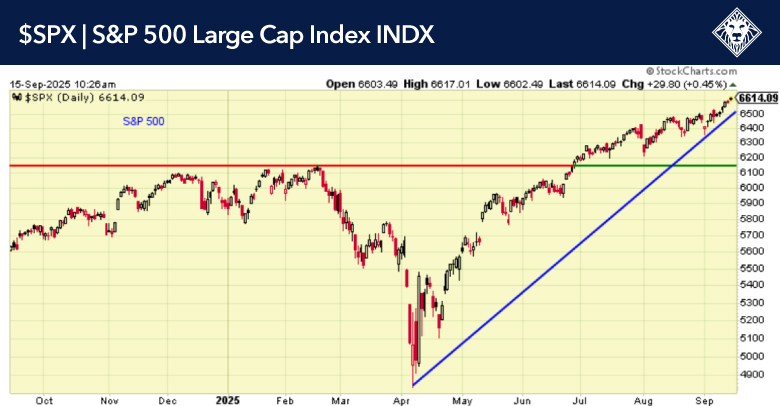
Historically, September and October have not been very good months for the market, but so far in September it is holding up very well. We might expect some volatility over the next 6 weeks, but any pullback should be seen as buyable. I think the last quarter of 2025 could be very strong for the S&P 500, which has already passed 6500, and should reach our prediction of going over 6700 and possibly as high as 7000 by year-end. The markets could have an incredible 5–10-year run. If you’re not heavily invested, we think you should start buying ASAP.
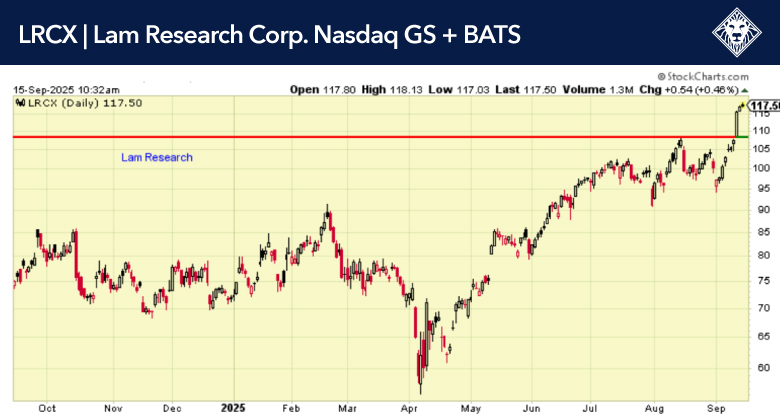
AMD and Lam Research look ready to move higher.

An underwhelming employment report secures a September Fed rate cut. Non-farm payrolls increased by 22,000 in August, below expectations of 75,000 and our forecast of 66,000. There was a modest downward revision of 21,000 to the prior two months, in line with our expectations. June now shows a loss of 13,000 jobs, instead of an initial print of 147,000, the first monthly job loss since December 2020. Additionally, the average workweek was unchanged from a downwardly revised 34.2 hours. Average hourly earnings rose 0.3%, matching expectations, but the y/y change eased to 3.7%, below expectations of 3.8%. The unemployment rate ticked up to 4.3%, matching the consensus and our expectation.
This all but secures a 25 bp rate cut at the September FOMC meeting and makes a series of cuts more likely. We have long since argued that a 4.3% unemployment rate would trigger Fed action. We now have that. We have also argued for three rate cuts for most of this year. One 25 bp reduction at each of the next three Fed meetings would fulfill that expectation.
In the establishment survey, private payrolls increased by 38,000 and have averaged just 29,000 in the past three months, the fewest in this expansion. It compares very unfavorably to triple-digit monthly job growth earlier this year, highlighting the dramatic slowdown in job creation amid DOGE, tariffs, deportations, and other policy changes. The trend is consistent with slower overall economic growth, although not a recession at this time.


