

Trump, Trade Wars, and Icebergs: Why We Think This Dip is a Buy
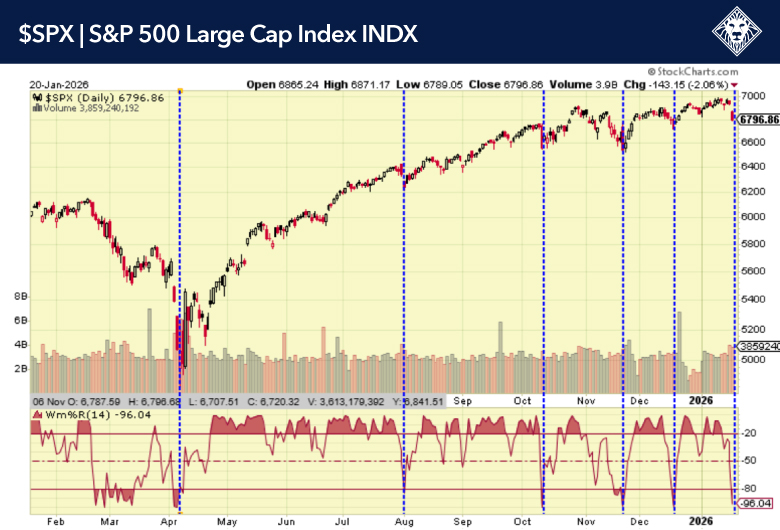
The markets pulled back Tuesday after President Trump reignited fears of a U.S. trade war with the European Union, America’s largest trading partner, unless they supported his push for American control of Greenland. When the market drops on this kind of news we generally think it should be considered time to buy, as this reaction should be short-lived. The markets have sold off to the point where they are oversold and nearing support.
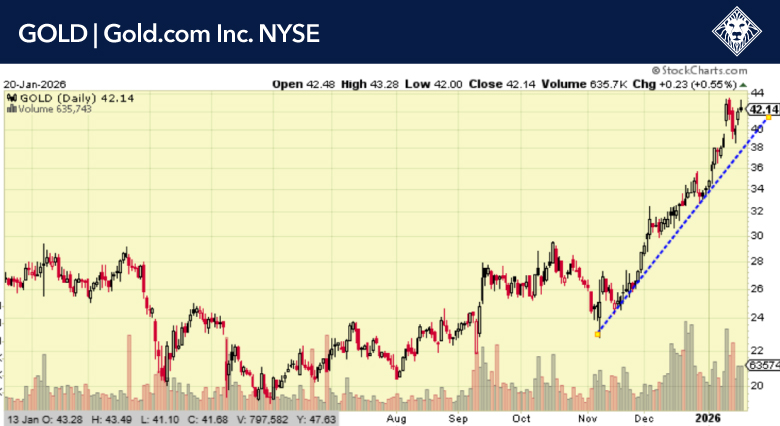
Bitcoin also sold off and looks attractive at these levels. Gold has gone parabolic. Can it go higher? Yes, but this could be a good place to move up your stops and hedge your position. Nothing goes up forever, not even gold.
Retail sales jumped a bigger-than-expected 0.6% in November, the most in four months, following a downwardly revised -0.1% in the prior month. Sales were boosted by the end of the government shutdown and the kickoff of the holiday shopping season. Despite considerable volatility in sales this year due to tariffs, low consumer sentiment, and affordability concerns, retail sales have increased an average of 0.2% per month in 2025 through November, which is only slightly below the historical mean of 0.3%. It reflects consumer resilience which supports our outlook for continued economic expansion into 2026.
Initial claims for unemployment insurance fell 9,000 last week to a lower-than-expected 198,000. This was the eighth decline in the past ten weeks, pushing initial claims near the lows of this cycle. The trend is consistent with subdued layoffs and still-robust labor demand, which is supporting a continued economic expansion.
Continuing claims in the previous week declined 17,000 to 1.884 million, while the insured jobless rate was unchanged at 1.2%. Both indicators are low by historical norms and suggest that long-term unemployment is not an issue for the economy.
